





Each of Us Plays a Role in Research
On several of our tours, guests have the opportunity to help scientists research Alaskan wildlife.
The numbers that matter
Help scientific research with species count
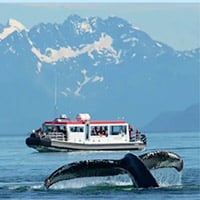
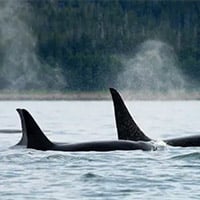
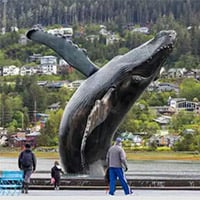
Guests on our whale-watching tours help identify and count humpback whales, killer whales, and sea lions, which aids scientists in tracking population data.


Sea creatures galore
Pull crab pots and look for invasive species
While out on tour, our guides will pull crab pots and you can help out by looking for invasive species like the European Green Crab, which can harm the native ecosystem. These pots also give you a unique look into the biodiversity in Alaskan waters.
A Tour Just for the Disney Kids
A special partnership with Disney Cruise Lines
If you’re joining us through Disney Cruise Lines, you can join us for a special citizen science tour designed for kids.
Our science guides walk through a water quality test while teaching everyone the importance of clean water for healthy salmon populations.

Field Studies
Active Research Programs
Our tours actively contribute to peer-reviewed science. Every observation made aboard is channeled directly to leading researchers across the Pacific Northwest and beyond.
Are you a researcher interested in our data? We’re happy to provide you with any of our data sets!
Contact us at tour@gguiding.com for more information.
Humpback Whale Research
Humpback Whale Photo Identification
Suzie Teerlink Ph.D.
www.juneauflukes.org
Purpose of this activity: To collect humpback whale photo IDs and corresponding data from existing platforms to help monitor humpback whales in the Juneau area. Photo identifications allow us to track individuals through time, estimate abundance, individual preferences in feeding locations, and document important life history information such as frequency of calving.
These observations:
- Contribute important baseline data for monitoring humpback whales
- Provide an opportunity for more directed research questions
- Engage the public in the scientific process and give them hands-on experience with data collection
Check out the 2025 Humpback Survey or visit Happywhale.com to see data from our Gastineau Guiding trips.

Orca Research
Orca Observations
Research Associate, Josh D McInnes
Marine Mammal Research Unit Institute for Oceans and Fisheries, Aquatic Ecosystem Research Laboratory at University of British Columbia.
Purpose of the activity: With three morphotypes of orca in Alaskan waters (resident, transient and offshore), we attempt to get photographs of the dorsal fin and saddle patch when we encounter orca.
Interested in Learning More? Check out the Orca Observations from the 2024 season
Invasive Species Monitoring
Invasive Species Monitoring
Contact: Tammy Davis, Invasive Species Coordinator, Alaska Department of Fish and Game and Linda Shaw, Wildlife Biologist, Habitat Conservation Division, Invasive Species, NOAA
Purpose of the activity: To monitor Southeast waters for the presence of the invasive European green crab and capture snapshots to record the number and types of animals released from the trap.
These monitoring efforts:
- Test Auke Bay waters for either the presence or absence of the invasive European green crab; they have been recently been found within 100 miles of the Alaskan boarder as zooplankton!
- Use photography to provide baseline data on the ecology of Auke Bay.
- Provide an opportunity to learn about some of the area’s ‘less popular’ marine animals.
Interested in learning more? Check out our European Green Crab & Subtidal Life Summary 2025


Marine Mammal Conservation
Piniped Entanglement in Marine Debris
Kim Raum-Suryan, Pinniped Entanglement Group Coordinator, Co-Management, ESA Section 7
Purpose of the activity: To educate on the frequency of pinniped entanglement, and report any injured, entangled or dead marine mammals in the water or on the beach.
These observations:
- Assist in the observation and reporting of injured and/or entangled marine animals.
- Help in reducing the number of entangled animals
- Provide education to guests and community members about marine debris and pinniped entanglement in Alaska
Interested in Learning More? Check out our Steller Sea Lion Survey 2025 data.
Research is a cornerstone of conservation
All of the above activities are considered “citizen science”, which is scientific research conducted, in whole or in part, by amateur scientists or lay persons. The process of science (or citizen science) can be tedious at best; however, it is many small observations over time that can lead to significant truths. By participating in this tour, and its citizen science projects, you are contributing to a better understanding of the nature of Southeast Alaska.